Wireless Remote Control System (Common Scenario in the Security Industry)

This system consists of a **handheld remote transmitter and a wireless receiver controller** (featuring relay or bus outputs). It employs advanced security protocols, such as rolling codes and AES encryption. The receiver controller integrates with alarm control panels, access control systems, surveillance platforms, and audible/visual sirens. It is designed for applications including **intrusion alarm management, emergency assistance, access control and gate automation, perimeter system bypassing, security system integration, and emergency response**. The solution is suitable for a wide range of security environments, such as commercial properties, residential complexes, financial institutions, cultural and museum facilities, industrial sites, and managed premises.
1. Arming and Disarming of Intruder Alarm Control Panels (Core Application)
- For retail stores, offices, warehouses, finance rooms, and villas: Users can **arm** the system with a single touch when leaving and **disarm** it upon return. It also supports **"stay" arming (home arming)**—keeping perimeter protection active while disabling indoor infrared sensors—which is ideal for nighttime occupancy.
- Independent Partition Arming/Disarming: In systems with multiple zones, individual areas (such as a specific storage room or display counter) can be disarmed while the rest of the premises remain under protection. For example, in jewelry stores, mobile phone shops, or museums, staff can temporarily bypass sensors for a specific display case to retrieve items without disabling the entire alarm system; all such actions are logged for traceability.
- Alarm Reset and Clearing: Following an alarm trigger, authorized personnel can use a remote control to silence the siren and reset the control panel, preventing repeated false alarms.
2. Emergency SOS / Duress Alarm (Anti-Robbery & Assistance)
- For bank branches, convenience stores, gas stations, and checkout counters: Personnel can use a portable remote to trigger a **one-touch emergency (duress) alarm**. The alarm is activated silently; the backend platform receives the alert, automatically initiates video recording, and notifies security personnel or law enforcement (110). No sound is emitted on-site, ensuring the safety of those present.
- For residential complex patrols, campus security, and school staff on duty: The device can be carried at all times, allowing for an instant call for help in the event of a conflict or dangerous situation.
3. Remote Control for Access Points, Electric Gates, Barrier Gates, and Rolling Shutters
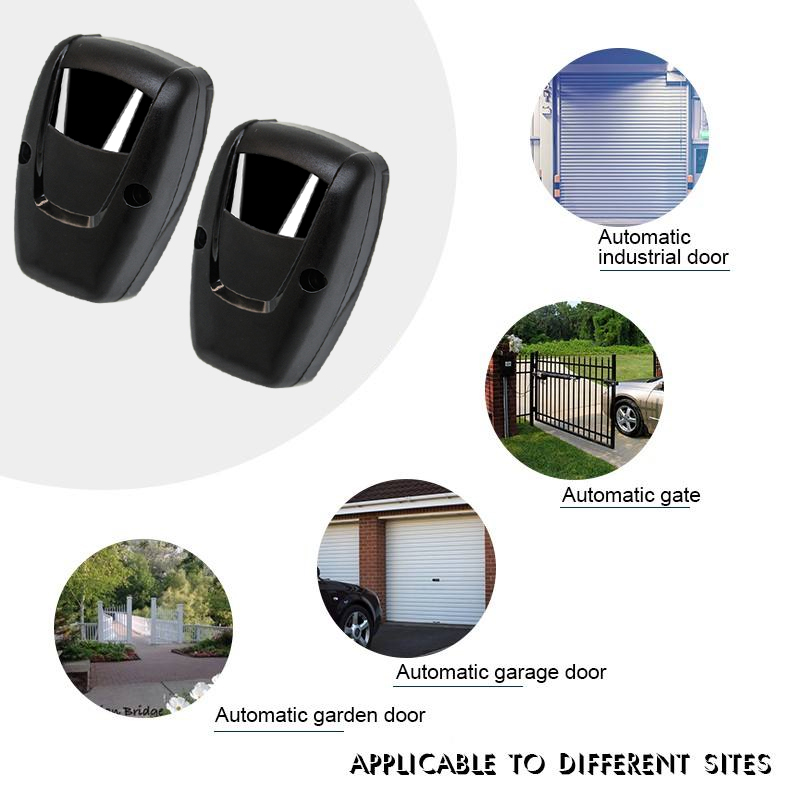
- Residential complex entrances, industrial facility barrier gates, electric pedestrian gates, and commercial rolling shutters: Security personnel or authorized individuals can remotely open, close, or stop these entry points. The system utilizes output switch signals from a controller to interface with electric locks, gate control boards, or barrier gate controllers.
- Temporary Access: Security staff—whether stationed in a guard room or on patrol—can remotely grant access to visitors or delivery vehicles in situations where card-based or facial-recognition-based entry is inconvenient.
> This generally serves as a supplementary verification method; for high-security locations, remote-controlled access should not be used as the sole means of entry.
Perimeter Security System Bypass Control
For perimeter systems such as electronic fences, infrared beam barriers, fiber-optic vibration sensors, and leaky coaxial cable sensors:
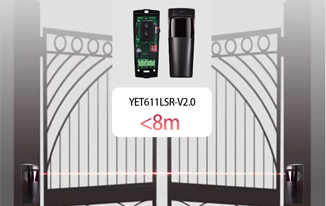
- When security patrols or maintenance personnel need to cross a perimeter barrier, they can use a remote control to **temporarily bypass a specific security zone**, then re-arm it after passing through.
- Supports integrated control: A single button on the remote can activate searchlights, deterrent loudspeakers, or high-intensity warning lights.
4. Security Equipment Integrated Control (via Controller Relay Outputs)
The receiving controller features multiple relay outputs that interface with various security subsystems, with customizable button functions:
- One-touch activation: Audible/visual alarms, emergency lighting, security spotlights, and public address loudspeakers.
- One-touch integration: Retrieve surveillance footage, move cameras to preset positions, or trigger image snapshots.
- One-touch deactivation: Turn off alarms, alarm outputs, or electronic access control locks.
Ideal for use in monitoring centers, guard posts, or by security patrol staff to quickly operate security equipment.
5. Parking Lot and Garage Security
Remote control for garage doors and vehicle barriers; integration with garage anti-theft alarm systems, allowing for remote arming/disarming of infrared or vibration sensors; and assistance with security verification for vehicle entry and exit.
6. Security for Museums, Exhibition Halls, and Valuables
In museums, art galleries, or luxury showrooms, vibration/displacement sensors on exhibits or display cases are connected to an alarm control panel. Authorized staff can use a remote control to **disable the security zone for a specific exhibit**—for maintenance or replacement—while keeping the rest of the area armed, thereby preventing security vulnerabilities that would arise from disarming a larger zone.
7. Security for Property Management, Industrial Parks, and Construction Sites
- Remote bypassing of perimeter alarms for temporary fencing at construction sites.
- Remote control for security patrols to toggle the armed/disarmed status of specific high-priority zones within a facility or park.
- Remote activation and deactivation of surveillance equipment and audible/visual warning devices at construction sites.
Key Selection Criteria for the Security Industry (Distinguishing from Industrial Remote Controls)
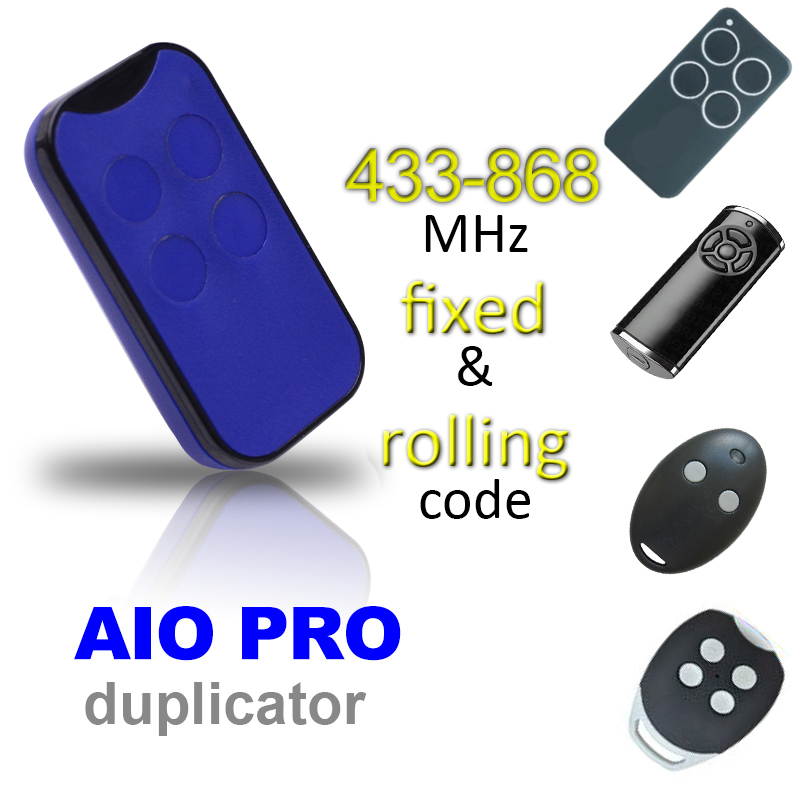
1. Encryption: Prioritize **rolling codes or AES encryption**; avoid fixed codes (which are easily duplicated and pose significant security risks).
2. Access Control: Supports remote control ID registration, deletion of lost units, and hierarchical permissions (e.g., standard users may only disarm their assigned zones, while administrators have full control).
3. Logging: Remote control operations—including the timestamp, specific remote ID, and the button pressed—are uploaded to a platform for post-incident auditing.
4. Communication: Primarily operates on 433 MHz or 868 MHz frequencies; some models support two-way communication, providing feedback on the system's current status (e.g., armed or in an alarm state).
5. Protection: Outdoor models feature an IP65 waterproof rating, suitable for facility grounds or perimeter security; indoor models are typically compact, keychain-style units.
The advantages of install photocell sensor
Why Global Customers Are Raving About the YET6956WTR WiFi to RF Converter?
Related Article