YET205B-630 Superheterodyne Receiver Module for Smart-Home & Security Development
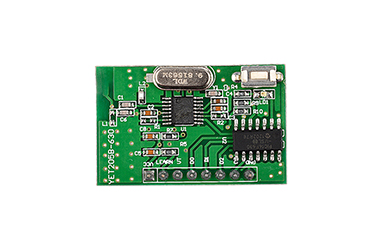
Hardware developers must validate key parameters before selecting RF receiver modules: physical dimension, operating voltage, pin-out definition and special functional demands. Many basic market-available receivers output raw RF signals without onboard decoding, forcing teams to invest heavy workload on firmware development. They also suffer poor anti-interference performance in complex indoor environments, raising false-trigger risks for fire-safety and security hardware.
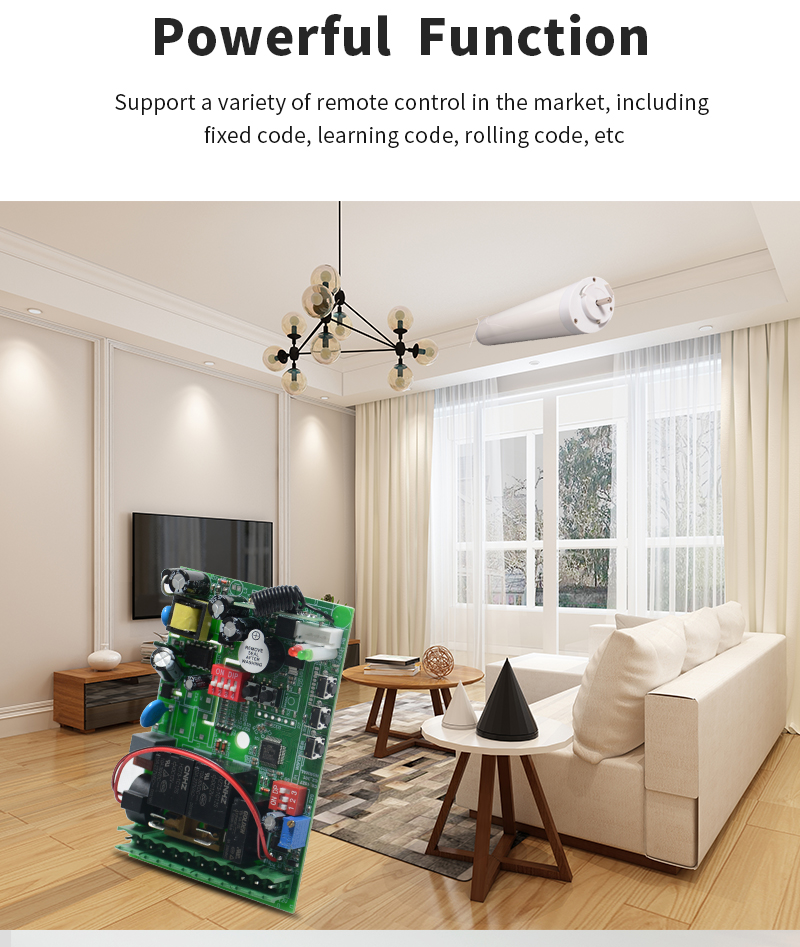
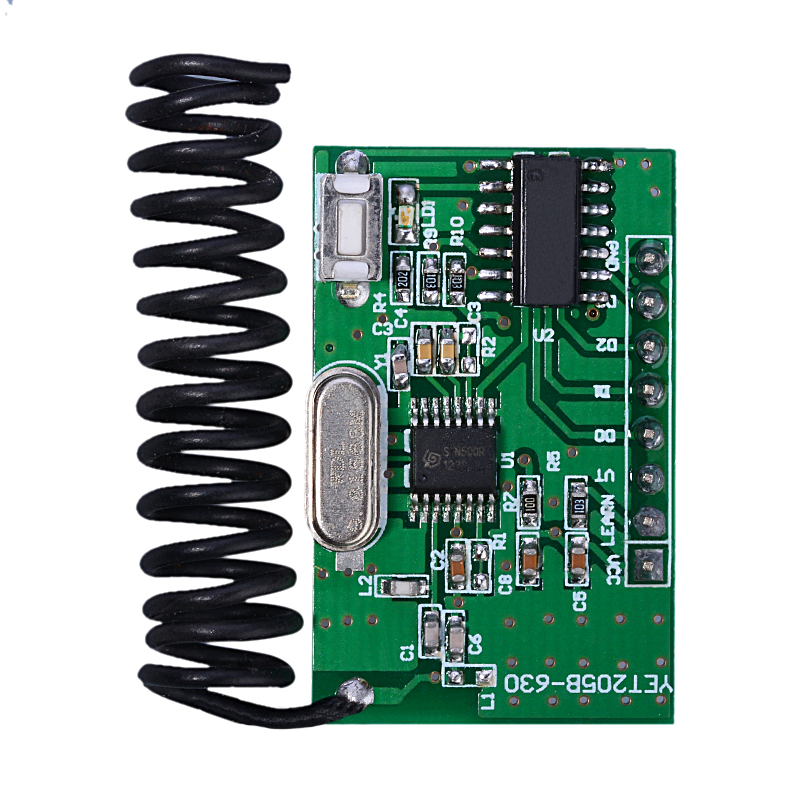
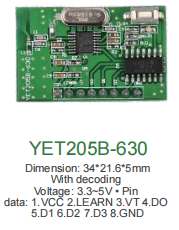
This superheterodyne receiver module comes with built in decoding, measuring 34*21.6*5 mm. It supports 3.3-5 V wide-voltage input with 8 pins: 1.VCC,2.LEARN,3.VT,4.D0,5.D1,6.D2,7.D3,8.GND. The LEARN pin enables remote code learning, while four data pins deliver decoded digital output directly to MCU, cutting firmware workload significantly.
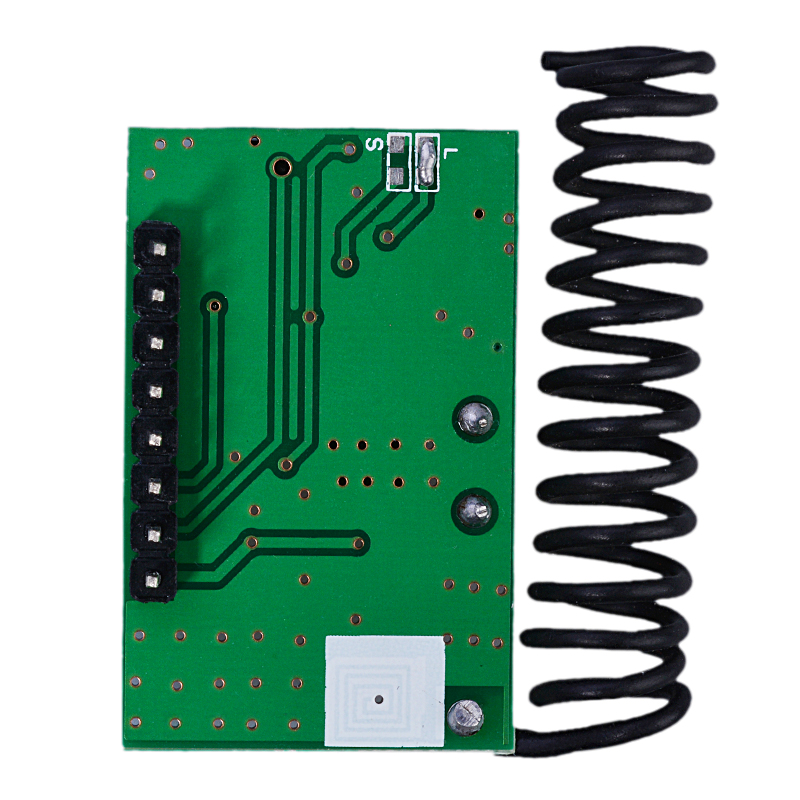
In real-world development projects, product teams adopt this unit for multiple targets: smart-home remote control panels, fire alarm auxiliary receiving terminals, emergency-button hosts and access-control devices. Its superheterodyne architecture ensures stable signal reception through walls and obstacles, lowering false alarms for safety-related equipment. Engineers simply solder the 8-pin header, connect microcontroller IO ports, and finish remote pairing via the LEARN pin without complex RF debugging.
Field feedback from integrators highlights practical strengths. Locksmith and smart-home solution partners report fast prototype iteration and smooth mass-production transition. Safety-project clients confirm rare misfire triggers even under dense wireless interference. Besides security and fire alarm hardware, it also fits gate control, barrier operators, LED light controllers and shutter systems. It balances compact size, simple integration and reliable receiving performance for diverse wireless receiver product development.
YET870-V2.0 Dual-Motor Door Controller – Intelligent Control for Rocker & Buried Door Operators
YET404WTR Tuya WiFi 4-Channel Smart Receiver | Upgrade Your Automatic Gate to Mobile App Control
Related Article